Kentucky Outland Trophy winner Bob Gain dies

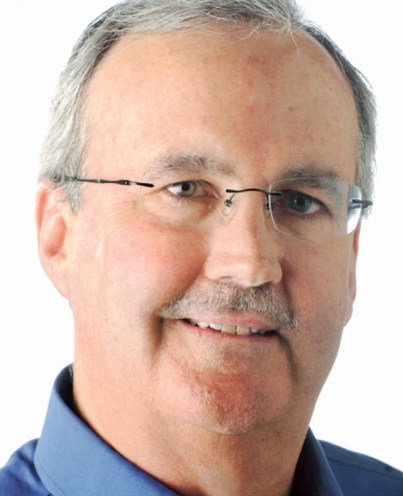
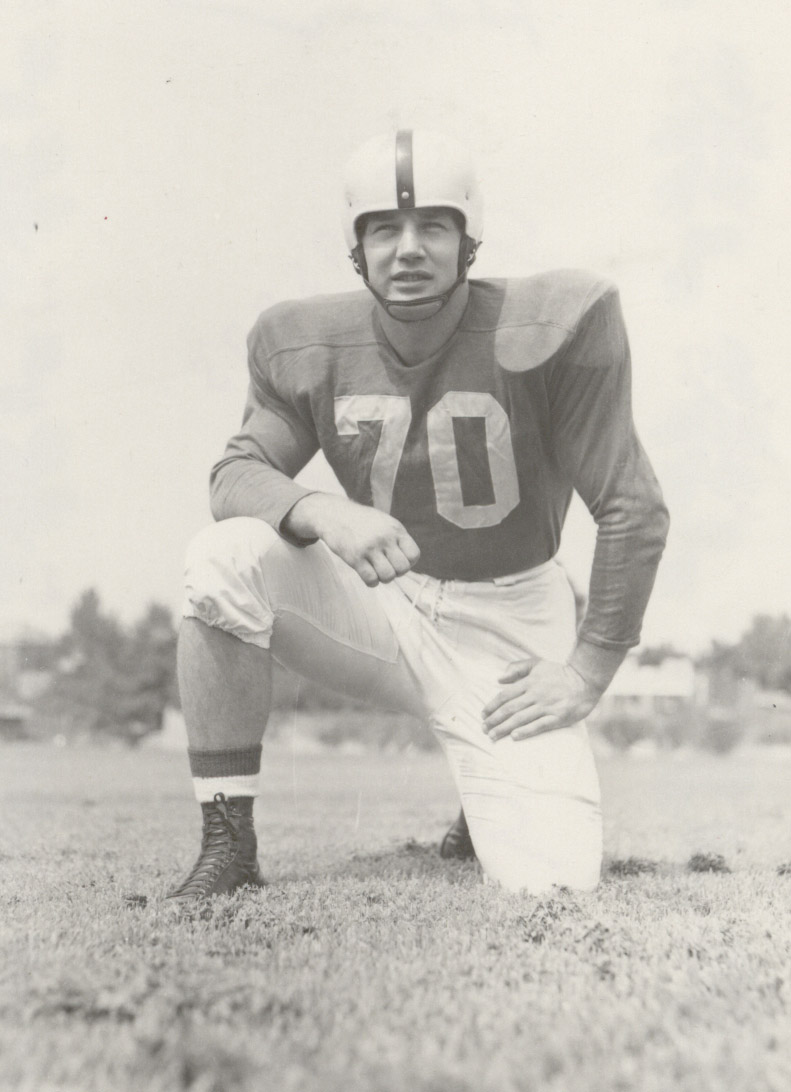
Bob Gain, 1950 Outland Trophy winner.

Bob Gain, 1950 Outland Trophy winner.

LEXINGTON, Ky. – Bob Gain, one of the greatest players in the history of University of Kentucky football, passed away Monday in Willoughby, Ohio, at the age of 87.

Gain was a stalwart offensive and defensive lineman at UK from 1947-50 under Coach Paul “Bear” Bryant. Also a placekicker, he still holds the school record for most extra points in a game when he made 10-of-10 in a win over North Dakota in 1950. Coming to UK from Weirton, W.Va., Gain helped lead the Wildcats to a four-year record of 33-10-2 and was a member of the Cats’ first three bowl teams in school history.

Kentucky had an 8-3 record in 1947 and made its first postseason appearance with a victory over Villanova in the Great Lakes Bowl.  UK went 9-3 in the 1949 season and played in the Orange Bowl. The Wildcats were 11-1 in 1950, winning the Southeastern Conference championship. Gain capped his collegiate career with a 13-7 victory over Oklahoma in the 1951 Sugar Bowl, ending the Sooners’ 31-game winning streak. UK is recognized as the 1950 national champion by the Sagarin Computer Ratings.

In 1950, Gain became the first player in Southeastern Conference history to win the prestigious Outland Trophy as the nation’s best interior lineman.  He earned first-team All-America honors as a junior and senior. He was a three-year All-Southeastern Conference choice, first team as a junior and senior and second team as a sophomore.

Although a first-round selection of the National Football League’s Green Bay Packers (fifth pick overall), Gain played the 1951 season with the Ottawa Rough Riders in the Canadian Football League, winning the Grey Cup championship. He played for the NFL’s Cleveland Browns in 1952 before serving in Korea as a first lieutenant in the United States Air Force in 1953.

Gain returned to the Browns in 1954, where he played until 1964. He had a stellar career as a defensive lineman with the Browns.  He was named first-team All-Pro once, second-team All-Pro seven times, and played in the Pro Bowl five times. He continued to be part of champion teams, as the Browns won the NFL title in 1954, 1955 and in 1964.

Gain received numerous honors following his career.  He was named to the College Football Hall of Fame in 1980.  His UK jersey is retired and he is a member of the UK Athletics Hall of Fame. He was elected to the West Virginia Sports Hall of Fame, the Cleveland Sports Hall of Fame and the Kentucky chapter of the Pro Football Hall of Fame.  He also was tabbed for the All-SEC Quarter-Century Team, covering the years 1950-74, by the Birmingham Quarterback Club.

Tony Neely

Asst. AD / Media Relations

University of Kentucky Athletics

Joe Craft Center

338 Lexington Avenue

Lexington, KY   40506

(859) 257-3838

Former Outland Trophy winner Bill Stanfill dies

Bill Stanfill, winner of the Outland Trophy in 1968.

Bill Stanfill, winner of the Outland Trophy in 1968.

University of Georgia All-American, Outland Trophy winner, and College Hall of Fame inductee Bill Stanfill died Thursday night in Albany, Ga.

Born Jan. 13, 1947, the Cairo native followed his stellar college career as one of the NFL’s greatest players as a member of the Miami Dolphins who selected him in the first round of the 1969 NFL draft. In 1969, he was named the AFL Rookie of the Year runner-up and during his career was named All-Pro four times. He was a starter on the 1972 and ’73 Miami Dolphin Super Bowl championship teams.

CLICK HERE to read the entire store at GeorgiaDogs.com.


Obituary: John HIcks, Ohio State’s 1973 Outland Trophy winner

John Hicks won the FWAA’s Outland Trophy in 1973. He is one of four Ohio State players to claim the Outland Trophy. Jim Parker (1956), Jim Stillwagon (1970) and Orlando Pace (1996) are the others.

October 30, 2016

FOR IMMEDIATE RELEASE

Ohio State Contacts: Jerry Emig (614-203-2766 and emig.2@osu.edu);

Adam Widman (614-572-6903 and widman.12@osu.edu)

Buckeye Family Loses a Legend: All-Time Great John Hicks

Woody Hayes called Hicks “the greatest interior lineman I have ever coached”

COLUMBUS, Ohio – John Hicks, a two-time All-American and major award winner and undeniably one of the most outstanding Ohio State football players of all time, died Saturday after a long illness. Hicks’ wife, Cindy, contacted the Department of Athletics with the news. He was 65.

An offensive guard from Cleveland’s John Hay High School, Hicks was a three-year starter for Woody Hayes-coached teams that won Big Ten Conference championships in 1970, 1972 and 1973 and advanced to the Rose Bowl in each of those seasons. Hicks was the first player to start in three Rose Bowls and in 2009 he was inducted into the Rose Bowl Hall of Fame.

“I was stunned and saddened to hear the news of John Hicks’ passing,” Ohio State coach Urban Meyer said. “He was truly one of the all-time greats for this university who was always good to this football program and the community. He will truly be missed and my thoughts and prayers go out to his family.”

Freshmen were ineligible in 1969, Hicks’ first year on campus, but in 1970 he helped the Buckeyes to a 9-1 record, a 7-0 mark in the Big Ten, including a 20-9 win over Michigan, and the national championship as awarded by the National Football Foundation.

Ohio State was 3-1 in 1971 before a knee injury sidelined Hicks and caused him to miss the final six games of what would become a 6-4 campaign.

Hicks would come back stronger than ever. In 1972 he was a first-team All-American for an Ohio State team that went 9-2 and 7-1 in the Big Ten with a 14-11 victory over Michigan. This was the year he began paving the way to greatness for a freshman running back from Columbus named Archie Griffin.

In 1973 the Buckeyes were 10-0-1 with Hicks earning unanimous All-American honors. The Buckeyes were awarded the Rose Bowl berth after a 10-all tie with Michigan, and Hicks’ last game as a Buckeye was a 42-21 dismantling of USC in the 1974 Rose Bowl game.

Hicks made history in 1973. Not only was he a unanimous All-American, but he won both the Lombardi Award and the Outland Trophy as the best interior lineman in the nation and he finished second – second! – in the Heisman Trophy voting to Penn State’s John Cappelletti. Teammates Griffin and linebacker Randy Gradishar were fifth and sixth, respectively, in the Heisman voting that year.

Hicks would go on to become a first-round NFL Draft pick of the New York Giants, who he played for from 1974 to 1977.

Hicks was inducted into the College Football Hall of Fame in 2001 and the Ohio State Sports Hall of Fame in 1985. His careers after football included running his real estate development company and “paying forward” through community service initiatives such as the Boys and Girls Club of Central Ohio and the Central Ohio Diabetes Association.

Guest column: ’45 Aggies over Army? Coaches’ revisionism slap to Cadets, writers 1

Editors Note:  Bob Hammel, former award-winning Sports Editor of the  Bloomington  (Ind.) Herald-Times, was the FWAA’s President in 1992 and the 1996 Bert McGrane Award recipient. In the following  column, he throws a red flag on the American Football Coaches Association (AFCA) for its recent move to retroactively name Oklahoma A&M (now Oklahoma State) the 1945 National Football Champion.  

By Bob Hammel

Throw a flag, for heaven’s sake. It’s time to introduce the Statue-of-Liberty world to the statute of limitations.

The American Football Coaches Association announced in early October it has awarded the 1945 national championship to Oklahoma A&M, which now is Oklahoma State. How and why are questions raised and unanswered by the ludicrous AFCA move.

A&M had a nice team in ’45. Unbeaten. No. 5 in the season-ending Associated Press poll.

No. 1 that year, and ranked as one of the best college teams of all time, was Army.

Blanchard and Davis. The Touchdown Twins. “Mr. Inside” and “Mr. Outside.” That Army.

The one that in early November that year squared off with No. 2-ranked Notre Dame and won, 48-0, then three weeks later closed against the new No. 2, Navy, and won, 32-13.

It’s too bad the AFCA’s only five-time national Coach of the Year, Joe Paterno, wasn’t still around to dress down this modern group with an “Are you serious?” rebuke. Because he would have.

Fifty years after Blanchard and Davis entered the scene, Paterno had a high-scoring national power at Penn State and was asked on a Big Ten telephonic press conference when the modern game began to emerge, when the high-powered change came? With Blanchard and Davis and those great Army teams?

Over the telephone you could feel Paterno smiling.

“My high school coach took me up to the Polo Grounds to watch them play Duke,” he said. “They beat Duke 19-0 and Blanchard hit the second or third play from scrimmage and ran the whole distance.

“But I don’t know whether that combination changed football. The Army thing was just a matter that all the great athletes were located in one place, and they were playing against people who weren’t as great as they were.

“That’s not to say that Davis and Blanchard were not great players. They were.

“But what they were doing was not different from what anybody else was doing at that time. They just happened to be better.”

Than anybody.

The recent nonsense came about because somebody noticed that the AFCA was in business for almost 30 years before anyone gave coaches a voting voice in picking the national champion — back in the times when champions were picked by polls, not playoffs. In 1950, United Press started a weekly poll of coaches and the leader of the last one was UP’s — hence, the coaches’ — national champion. That was 14 years after the rival Associated Press had begun a national sportswriters’ poll. It certainly wasn’t the best way to pick a champion, but coaches and administrators and eventually the gigantic TV dollar wrangled for years about the right way to conduct a playoff, or if even to have one. We’re into just the third year of their common-sense solution, and someone at the AFCA recently decided coaches should select the real national champion from all those years — 1922 through 1949 — when there was an AFCA but no coaches’ poll.

The 1945 selection should be enough to end that folly.

There was an AFCA in 1945. It named an 11-man All-America team and four were from Army, two more from teams Army beat. Bob Fenimore, an outstanding back, was on there from Oklahoma A&M — with, it’s a good bet, fewer votes than Blanchard or Davis. One AFCA All-American was from a team the Aggies beat.

That final 1945 AP poll had Army (9-0) No. 1, Navy (8-1, the loss to Army) No. 2, Alabama (9-0) No. 3 and — imagine that! — Big Ten champion Indiana (9-0-1) fourth. Yes, the final vote was taken before the bowl games. Army and Navy — like Notre Dame and the Big Ten — did not go to bowls then. Oklahoma A&M (8-0) did and beat No. 7 St. Mary’s in the Sugar Bowl, 33-13. But, perfect-record Alabama won the much more prestigious Rose Bowl over No. 11 Southern Cal, 34-14. In the poof that made Army and Navy vanish, what happened to ’Bama, not to mention Indiana — which won at Michigan, at Minnesota, at Illinois, at Iowa and at Pitt (and 54-14 over Nebraska)?

Old data can look different, crunched into one of today’s computers. But nobody computes football data better than Jeff Sagarin, and the news from the AFCA made him gasp. He has run the ’45 season, too. He pulled it out and found his numbers had Oklahoma A&M 24th — calculated to lose by three touchdowns to Army.

The 1945 Associated Press poll had votes from 116 writers, coast-to-coast. Army was a unanimous No. 1, which undoubtedly meant that a qualified voter or two or three from Oklahoma — fully versed in Oklahoma A&M’s virtues — went for Army.

There’s a group called the Football Writers Association of America, which has been around almost as long as the AFCA. Its membership was the heart of the AP poll, and that group — through to its modern-day membership — has just been given a 71-year-late slap in the face.

But a weak one. The AFCA has entered a courtroom in which it has no case.

Outland presentation dinner plans announced

outland-semi-finalist-reception-2OMAHA — For the 20th consecutive year, the Football Writers Association of America (FWAA) and the Greater Omaha Sports Committee will combine to host the Outland Trophy Presentation Dinner.  It will occur on Wednesday, Jan. 11, 2017, at the Doubletree Hotel in downtown Omaha.

The 71st winner of the Outland Trophy (best interior lineman on offense or defense) will be revealed on Dec. 8 on The Home Depot College Football Awards. The show, on ESPN, is broadcast from the National Football Foundation’s College Football Hall of Fame in Atlanta.

The 2016 Outland Trophy winner will then appear in Omaha and receive his trophy. This tradition dates to 1997 when Nebraska offensive lineman Aaron Taylor became the first Outland Trophy winner to be honored in Omaha.

The Outland Trophy Presentation Dinner will have an Oklahoma flavor to it this season, which coincides with the 45th Anniversary of the Nebraska-Oklahoma Game of the Century, won by Nebraska, 35-31, in 1971.

The Sooners’ Greg Roberts, the 1978 Outland Trophy winner, will receive his trophy because only plaques were given by the FWAA during the era in which he was the winner. The 1988 winner, Tracy Rocker of Auburn, was the first player to receive an Outland Trophy. The Downtown Rotary Club of Omaha for many years has graciously sponsored the project of supplying former Outland winners (from 1946-1987) with their trophies.

Additionally, former Oklahoma Coach Barry Switzer will claim the third annual Tom Osborne Legacy Award. Switzer coached two Outland Trophy winners, Roberts and the late Lee Roy Selmon, the 1975 Outland Trophy winner. Both Osborne and Switzer were assistant coaches on the Nebraska and Oklahoma staffs, respectively, in 1971, when the Game of the Century was played, before later becoming long-running head coaches at those schools.

The Legacy Award, named after the legendary Osborne, goes to a person who predominately played, coached and/ or made extraordinary contributions to the interior line of college football and/or made contributions to the Outland Trophy. The winner must exhibit the characteristics of integrity, sportsmanship and fair play associated with Tom Osborne.

The winners of Nebraska’s three football senior awards also will be presented at the banquet .

The Tom Novak Trophy is awarded annually to the senior who “best exemplifies courage and determination despite all odds.” The Guy Chamberlin Trophy goes to the senior “who by his play and off-field contributions has added to the betterment of the Nebraska football squad in the tradition of Guy Chamberlin.” And the Cletus Fischer Native Son Award,  is given annually to the senior who “best exemplifies good work ethic, competitiveness, leadership, pride and love of Nebraska.”

For more information on the Outland Trophy Presentation Banquet contact Bob Mancuso Jr., Greater Omaha Sports Committee, 402-346-8003,   or at bmancuso07@msn.com.

Milt Tenopir, legendary O-Line coach at Nebraska, dies

Former Nebraska Offensive Line Coach Milt Tenopir, recipient of the inaugural Tom Osborne Legacy Award for contributions to line play, signs autographs at the Outland Trophy presentation banquet on Jan. 15 in Omaha.

Former Nebraska Offensive Line Coach Milt Tenopir, recipient of the inaugural Tom Osborne Legacy Award for contributions to line play, signed autographs at the Outland Trophy Presentation Banquet in January 2015.

Milt Tenopir, who coached some of college football’s most dominant offensive lines with Nebraska in the 1980s and ’90s, has died after a long battle with cancer. He was 76.

Tenopir won the first annual Tom Osborne Legacy Award in January 2015. The Award is presented at the Outland Trophy Presentation Banquet in Omaha to a person who has made great contribution to line play.

CLICK HERE to read the Associated Press obituary.

Former Nebraska Coach Tom Osborne recalled Tenopir as a great teacher who cared deeply about his players. CLICK HERE to read the entire story on Omaha.com.


Sound Mind Sound Body to sponsor FWAA Freshman All-America Team

The Football Writers Association of America is very excited and pleased to announce it has secured a sponsor for its 2016 Freshman All-America Team — Sound Mind Sound Body Football Academy.

The 16th annual 2016 FWAA Freshman All-America Team, presented by Sound Mind Sound Body Football Academy, will be announced at the association’s Annual Awards Breakfast on Jan. 9, 2017, at the College Football Playoff Media Hotel in Tampa, Fla. The FWAA’s First-Year Coach Award will also be revealed at that tifwaalogobigme.

“The FWAA Freshman All-America team is pleased to have Sound Mind Sound Body Football Academy on board as our sponsor,” said 2007 FWAA President Mike Griffith, who has administered the FWAA Freshman Team since its inception.soundmindsoundbody

“The camp, now in its 12th year, is a good representation of how prospective collegiate football student-athletes should be shaped and developed, with its emphasis on community and class room as well as football expertise,” said Griffith, a senior reporter/analyst with SECcountry.com.

Sound Mind Sound Body was established in Detroit in 2004 with the goal of increasing the number of youth who advance to colleges on scholarships, both academic and athletic.

Several of the nations top high school student-athletes have attended SMSB camps, including former FWAA Freshman All-Americas Malik McDowell of Michigan State and Devin Funchess of Michigan. Others include Jourdan Lewis of Michigan and 2015 Jim Thorpe Award winner and 2015 FWAA All-America Desmond King of Iowa.

“The Sound Mind Sound Body Football Academy presented by Adidas is honored to announce its partnership with the Football Writers Association of America,” said Curtis Blackwell, the Academy’s co-founder.  “Our partnership with the FWAA Freshman All-America team represents SMSB setting the bar for our campers to reach for the highest goals in their collegiate careers. The FWAA Freshman All-American team has been the first stop for several who have gone on to achieve greatness.”

The SMSB program will expand in 2017 and touch nearly 10,000 students. Camps will be held in Detroit, Los Angeles, Washington D.C, Houston, Atlanta, Toronto, Tampa, Charlotte, New Orleans, New York, Dallas, Phoenix,  Chicago and Ohio.

The FWAA’s Freshman Team is selected by a 10-person panel of nationally-prominent writers who represent each of the FBS conferences. Both true freshmen and redshirt freshmen are considered for the team. The pool of coaches for the First-Year Coach Award consists of those who are coaching in their first year at a school.

About the FWAA: The Football Writers Association of America, founded in 1941, consists of 1,400 men and women who cover college football. The membership includes journalists, broadcasters and publicists, as well as key executives in all the areas that involve the game. The FWAA works to govern areas that include game-day operations, major awards and its annual All-America team. For more information about the FWAA and its award programs, contact Steve Richardson at tiger@fwaa.com.

National Football Foundation details rule changes for 2016 season

As the 2016 season draws near, the National Football Foundation has partnered with Rogers Redding, the national coordinator of College Football Officiating, to generate awareness for rule changes in college football.

Changes for the upcoming season involve:

  • Blocking Below the Waist
  • Input From a Medical Observer
  • Low Hits on the Passer
  • Outcome of a Suspended Game
  • Scrimmage Kick Formation
  • Sliding Ball Carrier: Defenseless Player
  • Starting the Clock Near the End of a Half
  • Targeting: An Expanded Role for Instant Replay
  • Tripping the Ball Carrier
  • TV Access Inside the Limit Lines
  • Unsportsmanlike Conduct by a Coach
  • Use of Technology for Coaching
  • Experimental Rule:  Collaboration in Instant Replay

Click here to see a release from the NFF providing detail about each of these rule changes.

Funeral mass for Kensler will be Saturday in Wheat Ridge, Colo.

Tom Kensler

Tom Kensler

Former FWAA board member Tom Kensler will be remembered Saturday Aug. 6 at memorial services in Colorado.

A funeral mass will be celebrated at 11 a.m. Saturday at the Archdiocese of Denver Mortuary Chapel, 12801 W. 44th Avenue in Wheat Ridge, Colo.

Kensler suffered a brain aneurysm on July 6 at his home in Arvada, Colo., and died on July 22.

Kensler, 64, retired after a long tenure at the Denver Post in June 2015. He had previously worked at newspapers in Oklahoma and Texas.