FWAA member Bo Carter and co-authors have new book on Dizzy Dean

“Dizzy – Dean of Baseball & My Podnah” – Cool Cat Communications, October 2016 U.S. $24.95; Canada $27.95   

FWAA member Bo Carter and journalist Mark McDonald, a former Dallas area media member, have tri-authored a book with the late Gene Kirby (the play-by-play voice for Army football for several seasons) called “Dizzy: Dean of Baseball and My Podnah.”

Somewhere between heaven and second base, a tall skinny kid from the cotton fields of Arkansas —or was it Oklahoma?– emerged with a white-hot fastball and country cool. Meet Jay Hannah Dean. Folks called him “Dizzy.”

Dizzy Dean was a plain-spoken but colorful athlete who showed up on the big stage of professional baseball when the nation needed a light moment. Dizzy’s baseball and total persona were a high-wire act without a script, providing Americans relief from the struggles of everyday life during the Great Depression.

A Hall of Fame baseball career was just the start. Once Dizzy migrated to the broadcast booth he teamed with the likes of Pee Wee Reese and producer Gene Kirby to deliver the wildly popular CBS Game of the Week.

Here, at long last, is a book that takes you behind the scenes and behind the television cameras.

Of the many books written on Dizzy, none is told from such an intimate perspective, nor with the shared sense of playful mischief. Gene Kirby’s text and photo collection show why the pitcher was a baseball phenom, but more importantly, show why Dizzy remains an enduring legend.

To order copies, please contact:

Cool Cat Communications

Box 701713

San Antonio, TX 78270-1713

Email: Coolcatcomm@att.net

Bo Carter phone: 214-418-6132

Former Outland Trophy winner Bill Stanfill dies

Bill Stanfill, winner of the Outland Trophy in 1968.

Bill Stanfill, winner of the Outland Trophy in 1968.

University of Georgia All-American, Outland Trophy winner, and College Hall of Fame inductee Bill Stanfill died Thursday night in Albany, Ga.

Born Jan. 13, 1947, the Cairo native followed his stellar college career as one of the NFL’s greatest players as a member of the Miami Dolphins who selected him in the first round of the 1969 NFL draft. In 1969, he was named the AFL Rookie of the Year runner-up and during his career was named All-Pro four times. He was a starter on the 1972 and ’73 Miami Dolphin Super Bowl championship teams.

CLICK HERE to read the entire store at GeorgiaDogs.com.


Middle Tennessee State’s Steven Rhodes named fifth winner of Armed Forces Merit Award

Armed Forces Merit Award

Armed Forces Merit Award

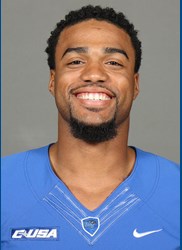
FORT WORTH, Texas — U.S. Marine veteran Steven Rhodes, a senior defensive end at Middle Tennessee State University, is the fifth recipient of Armed Forces Merit Award presented by the Football Writers Association of America (FWAA).

Coordinated by the staff at the Lockheed Martin Armed Forces Bowl, the Armed Forces Merit Award presented by the FWAA was created in June 2012 “to honor an individual and/or a group within the realm of the sport of football.”

Brant Ringler, the executive director of the Lockheed Martin Armed Forces Bowl, and Steve Richardson, the FWAA’s executive director, announced here Friday that Rhodes, who will be 28 in 11 days, is the 2016 recipient.

Steven Rhodes

Steven Rhodes

A seven-person committee made up of FWAA members and Lockheed Martin Armed Forces Bowl officials selected Rhodes from a list of 16 nominations for the 2016 award.  Nate Boyer of the University of Texas was named the initial recipient of the award in 2012, followed by Brandon McCoy of the University of North Texas in 2013, Daniel Rodriguez from Clemson University in 2014 and Bret Robertson of Westminster College (Fulton, Mo.) in 2015.  All four individuals were U.S. Army veterans before playing college football.

“On this very special day, Veterans’ Day 2016, we are pleased to join with the Football Writers Association of America to name Steven Rhodes as the fifth recipient of the Armed Forces Merit Award,” said Ringler. “We had a list of 16 outstanding nominations for this year’s award and it is difficult to select only one each year when we have individuals and programs that are very deserving of the honor.”

Richardson echoed Ringler’s sentiments along with adding that the FWAA is “pleased to team with Lockheed Martin Armed Forces Bowl to recognize Rhodes’ achievement as a veteran who used his armed forces experiences to benefit his teammates and coaches at Middle Tennessee State University.  The FWAA also salutes the other 2016 nominations for their contributions on-and-off the field of play.”

Rhodes joined the Middle Tennessee football program after serving five years in the U.S. Marines.  Following his enrollment in 2013, the NCAA originally ruled that Rhodes only had two years of eligibility and would have to sit out the 2013 season since he played recreational football on base for a two-year period.

After Rhodes’ eligibility story went national on August 18, 2013, the next day the NCAA issued a statement saying Rhodes could play immediately and had four years of eligibility. Since the August 2013 ordeal, Rhodes has played in 47 games at Middle Tennessee with 27 career starts, including nine this fall for the 6-3 Blue Raiders.

A 6-foot-3, 260-pound defensive end and fourth oldest player in the Football Bowl Subdivision, Rhodes is the team’s eighth leading tackler with 29 total stops (18 unassisted), with 4.5 tackles for losses, 2.5 sacks, two pass deflections, five quarterback hurries, one forced fumble and one fumble recovery.  For his career, Rhodes has 98 total tackles (63 unassisted).

Following graduation in 2007 from Antioch (Tenn.) High School where he played football, Rhodes enlisted in the Marine Corps as a shoulder injury and financial issues initially kept him from attending college.  Rhodes’ “road” back to college football started three years ago when he was stationed at the Marine Corps Air Station in New River, N.C.  When he was moved to MCAS Miramar, Calif., he started for the Miramar Falcons in 2012.

Even though he only played one season, his Miramar coaches saw the potential he displayed and helped to make sure he reached his goal.  A former Falcon coach helped Rhodes film his games so he could send them to colleges.  With the film from the games, Rhodes was recruited by Middle Tennessee, the school he had planned on attending before sustaining his shoulder injury.

Rhodes credits the Marines for “his healthy perspective and mental toughness.  What the [Marines] do and what they stand for — honor, courage, commitment — it stands for every aspect of my life.”

Motivated by his family, Rhodes states that his wife (Adrienne, formerly in the Navy but now a stay-at-home mom who home schools their children) and two sons (Kameron and Devon) inspire him to excel on the football field and in the classroom.  Rhodes is pursuing a degree in Organized Communication.  Rhodes met his wife while he was in the Marines and she was in the Navy.

“It’s definitely tough,” Rhodes said. “It’s like having several fulltime jobs. I’m a husband first, then a father, then a student-athlete. My freshman year was the worst — just trying to make that adjustment. My wife and I have gotten on the same page. She’s made it as seamless and worry-free for me as possible. We’re moving toward a common goal. It was a tough ride, but I wouldn’t change any of it. It’s molded me into the man I am today.”

Middle Tennessee coach Rick Stockstill said Rhodes had leadership qualities as soon as he joined the team, but that it took a while for him to have a big effect on the team because he was only around his new teammates at practice.

“Just because you’re a leader in some other capacity, until you get to know people and people get to know you on a personal level, I think it takes a little bit of time,” Stockstill said. “When he was a freshman, everybody on the outside assumed he was going to be a great leader and all of that, which he was. But it didn’t impact the team because the team didn’t know him. Now, he’s established himself not only as a player but as a person, he’s one of our leaders.”

ESPN Events, a division of ESPN, owns and operates a large portfolio of collegiate sporting events worldwide. The roster includes three Labor Day weekend college football games; FCS opening-weekend game; 13 college bowl games, 11 college basketball events and two college award shows, which accounts for approximately 250-plus hours of programming, reaches almost 64 million viewers and attracts over 700,000 attendees each year. With satellite offices in Albuquerque, Birmingham, Boca Raton, Boise, Dallas-Fort Worth, Honolulu, Las Vegas, Montgomery and St. Petersburg, ESPN Events builds relationships with conferences, schools and local communities, as well as providing unique experiences for teams and fans.  ESPN Events also manages the Big 12 Corporate Partner Program.  Collegiate Football — AdvoCare Texas Kickoff (Houston); AdvoCare V100 Texas Bowl (Houston); Air Force Reserve Celebration Bowl (Atlanta); Birmingham Bowl (Alabama); Boca Raton Bowl (Florida); Camping World Kickoff (Orlando, Fla.); Famous Idaho Potato Bowl (Boise); Gildan New Mexico Bowl (Albuquerque); Hawai’i Bowl (Honolulu); Las Vegas Bowl (Nevada); Lockheed Martin Armed Forces Bowl (Dallas-Fort Worth); MEAC/SWAC Challenge (Baton Rouge, La.); Montgomery Kickoff Classic (Montgomery, Ala.); Popeyes Bahamas Bowl (Nassau); Raycom Media Camellia Bowl (Montgomery, Ala.); St. Petersburg Bowl (Florida); The Home Depot College Football Awards (Atlanta) and Zaxby’s Heart of Dallas Bowl (Dallas-Fort Worth).  Collegiate Basketball — AdvoCare Invitational (Walt Disney World Resort near Orlando, Fla.); College Basketball Awards Presented by Wendy’s (Los Angeles); Gildan Charleston Classic (South Carolina); Hawaiian Airlines Diamond Head Classic (Honolulu); Jimmy V Men’s  Classic presented by Corona (New York City); Jimmy V Women’s Classic presented by Corona (Uncasville, Conn.); NIT Season Tip-Off (Brooklyn, N.Y.); PK80 (Portland, Ore.); State Farm Armed Forces Classic (Honolulu); State Farm Champions Classic (New York City); Tire Pros Invitational (Orlando, Fla.) and Wooden Legacy (Orange County, Calif.).  For more information, visit the official website, Facebook, Twitter or YouTube pages.

The Football Writers Association of America (FWAA, http://www.sportswriters.net) consists of the men and women across North America who cover college football for a living.  Founded in 1941, the membership includes journalists, broadcasters and publicists, as well as key executives in all the areas that involve the game. The FWAA works to govern areas that include game day operations, major awards and an All-America team.  Through its website, the FWAA works to improve communication among all those who work within the game. The FWAA also sponsors scholarships for aspiring writers and an annual writing contest.  Behind the leadership of President Mark Anderson of the  Las Vegas Review-Journal, Executive Director Steve Richardson and a board of veteran journalists, the FWAA continues grow and work to help college football prosper at all levels. There are now over 1,300 members.

Media Contacts

Two FWAA members have new book on 2015 Michigan State-Michigan game

EDITOR’S NOTE:  FWAA members Jack Ebling and Joe Rexrode co-authored a book about the 2015 Michigan State-Michigan football game. Rexrode has since left the Michigan State beat and is now a columnist at the The Nashville Tennessean. But his former paper printed an excerpt from the book, “The Perfect :10”, about the stunning ending to the game and the people involved. Ebling, a media staple of the Michigan State sports scene for years as a writer and now a broadcaster, has been to every Michigan State-Michigan game since 1969.)


President’s column: On alert for media safety

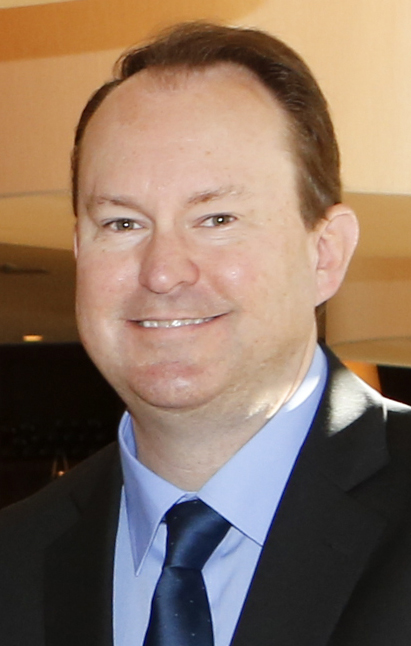
By Mark Anderson

All of us who cover college football know that uneasy feeling of walking out of a stadium late at night, carrying a computer bag and walking just a little faster than usual to find his or her car in a poorly lit lot.

2016 FWAA President Mark Anderson

2016 FWAA President Mark Anderson

It’s a reality in covering the sport these days.

The walks have gotten longer to media parking lots because many athletic directors have felt the need to provide top donors with what were once prime parking spaces for the media. Television also has made college football more of a night game, causing later and later starts and lonelier and lonelier parking lots in the wee hours of the morning for reporters.

The issue isn’t necessarily where a media lot is located, although some are quite a distance from the press box.  It is about safety. The Football Writers Association of America believes schools need to make sure no one has to worry about safely returning to get his or her car.

Thankfully, we’re not alone.

The hierarchy of the College Sports Information Directors of America  (CoSIDA) is working with the FWAA, the  United States Basketball Writers Association (USBWA) and the College Football Playoff (CFP) to make sure this will no longer be a concern — especially for female reporters who have reported instances when they not only didn’t feel safe, but even threatened.

The CFP, in its National Championship game on Jan. 9 at Tampa’s Raymond James Stadium, will have two services available for media exiting the stadium. Security personnel will be available “should media members wish to be escorted to their vehicles.” In addition a text service will be available for media to report any concerns or issues (post-game, specific location and the issue).

Here are the recommendations CoSIDA has sent out in a letter to conferences regarding press parking for college football and basketball games:

  • A golf cart should be made available two to three hours before game time if the distance from the media parking lot(s) to the sporting venue is longer than a quarter of a mile.
  • A golf cart, escort or security should be made available late at night if requested.
  • A texting service should be available for reporters arriving at the sporting venue and later when departing.
  • A precise and detailed description of the parking lots and distances to the sporting venue should be provided in all media information.

On the reporter’s end, I would suggest if there is a concern about the safety of covering an event, be proactive in communicating with the host sports information director. If you know ahead of time that this could be an issue, discuss during the week with the SID the above suggestions. Or, if you get to the stadium and then discover the problem, talk with the SID before kickoff to establish arrangements afterward.

We believe most SIDs are willing to work with reporters to make sure they return safely to their cars after a game. But if problems arise, we would like to be apprised of those.

Obituary: John HIcks, Ohio State’s 1973 Outland Trophy winner

John Hicks won the FWAA’s Outland Trophy in 1973. He is one of four Ohio State players to claim the Outland Trophy. Jim Parker (1956), Jim Stillwagon (1970) and Orlando Pace (1996) are the others.

October 30, 2016

FOR IMMEDIATE RELEASE

Ohio State Contacts: Jerry Emig (614-203-2766 and emig.2@osu.edu);

Adam Widman (614-572-6903 and widman.12@osu.edu)

Buckeye Family Loses a Legend: All-Time Great John Hicks

Woody Hayes called Hicks “the greatest interior lineman I have ever coached”

COLUMBUS, Ohio – John Hicks, a two-time All-American and major award winner and undeniably one of the most outstanding Ohio State football players of all time, died Saturday after a long illness. Hicks’ wife, Cindy, contacted the Department of Athletics with the news. He was 65.

An offensive guard from Cleveland’s John Hay High School, Hicks was a three-year starter for Woody Hayes-coached teams that won Big Ten Conference championships in 1970, 1972 and 1973 and advanced to the Rose Bowl in each of those seasons. Hicks was the first player to start in three Rose Bowls and in 2009 he was inducted into the Rose Bowl Hall of Fame.

“I was stunned and saddened to hear the news of John Hicks’ passing,” Ohio State coach Urban Meyer said. “He was truly one of the all-time greats for this university who was always good to this football program and the community. He will truly be missed and my thoughts and prayers go out to his family.”

Freshmen were ineligible in 1969, Hicks’ first year on campus, but in 1970 he helped the Buckeyes to a 9-1 record, a 7-0 mark in the Big Ten, including a 20-9 win over Michigan, and the national championship as awarded by the National Football Foundation.

Ohio State was 3-1 in 1971 before a knee injury sidelined Hicks and caused him to miss the final six games of what would become a 6-4 campaign.

Hicks would come back stronger than ever. In 1972 he was a first-team All-American for an Ohio State team that went 9-2 and 7-1 in the Big Ten with a 14-11 victory over Michigan. This was the year he began paving the way to greatness for a freshman running back from Columbus named Archie Griffin.

In 1973 the Buckeyes were 10-0-1 with Hicks earning unanimous All-American honors. The Buckeyes were awarded the Rose Bowl berth after a 10-all tie with Michigan, and Hicks’ last game as a Buckeye was a 42-21 dismantling of USC in the 1974 Rose Bowl game.

Hicks made history in 1973. Not only was he a unanimous All-American, but he won both the Lombardi Award and the Outland Trophy as the best interior lineman in the nation and he finished second – second! – in the Heisman Trophy voting to Penn State’s John Cappelletti. Teammates Griffin and linebacker Randy Gradishar were fifth and sixth, respectively, in the Heisman voting that year.

Hicks would go on to become a first-round NFL Draft pick of the New York Giants, who he played for from 1974 to 1977.

Hicks was inducted into the College Football Hall of Fame in 2001 and the Ohio State Sports Hall of Fame in 1985. His careers after football included running his real estate development company and “paying forward” through community service initiatives such as the Boys and Girls Club of Central Ohio and the Central Ohio Diabetes Association.

Obituary: Lynne Draper, founder of the Thorpe Award

Lynne Draper, a member and supporter of the Football Writers Association of America for many years, died Thursday Oct. 27. He was one of the founders of the National College Football Awards Association (NCFAA) of which the Outland Trophy, Bronko Nagurski Trophy and FWAA/Eddie Robinson Coach of the Year Award are members.


Finalists for Armed Forces Merit Award revealed

armed forces merit awardFORT WORTH, Texas — Led by 2015 runner-up Steven Rhodes of Middle Tennessee State University, four individuals and the Kansas State football program have been named as finalists for the 2016 Armed Forces Merit Award presented by the Football Writers Association of America (FWAA).

Other finalists for the 2016 AFMA are Fran McMenamin, a Marine veteran playing  on the offensive line at East Stroudsburg University, Naval Academy outside linebacker coach and Marine Robert Green as well as Texas Tech strength and conditioning coach and Army veteran Rusty Whitt.

The partnership between the K-State football team and the 1st Armored Brigade Combat Team brought Soldiers and players together at Fort Riley June 17 for a joint physical readiness training event.  Kansas State has been involved with Fort Riley since 2008.

Coordinated by the staff at the Lockheed Martin Armed Forces Bowl, the Armed Forces Merit Award presented by the FWAA was created in June 2012 “to honor an individual and/or a group with a military background and/or involvement that has an impact within the realm of college football.”

The award’s selection committee is made up of five FWAA members and two representatives from the Lockheed Martin Armed Forces Bowl.  The group reviewed 16 “candidates” for the 2016 honor where Rhodes, McMenamin, Green, Whitt and the K-State football program were confirmed finalists for the award.

Bret Robertson of Westminster College (Fulton, Mo.) was honored as the 2015 recipient of the Armed Forces Merit Award presented by the FWAA.  Rhodes, who was also considered for the Armed Forces Merit Award in 2013 and 2014, played in the 2013 Lockheed Martin Armed Forces Bowl

This year’s recipient will be announced this Veteran’s Day, Nov. 11.  The announcement of the 2016 recipient will be made jointly by Lockheed Martin Armed Forces Bowl Executive Director Brant Ringler and FWAA President Mark Anderson of the Las Vegas Review-Journal on an 11 a.m. (CT) teleconference.

Nate Boyer of the University of Texas was named the initial recipient of the award in 2012, Brandon McCoy of the University of North Texas topped the AFMA list in 2013 and Daniel Rodriguez from Clemson University was honored in 2014.

Guest column: ’45 Aggies over Army? Coaches’ revisionism slap to Cadets, writers 1

Editors Note:  Bob Hammel, former award-winning Sports Editor of the  Bloomington  (Ind.) Herald-Times, was the FWAA’s President in 1992 and the 1996 Bert McGrane Award recipient. In the following  column, he throws a red flag on the American Football Coaches Association (AFCA) for its recent move to retroactively name Oklahoma A&M (now Oklahoma State) the 1945 National Football Champion.  

By Bob Hammel

Throw a flag, for heaven’s sake. It’s time to introduce the Statue-of-Liberty world to the statute of limitations.

The American Football Coaches Association announced in early October it has awarded the 1945 national championship to Oklahoma A&M, which now is Oklahoma State. How and why are questions raised and unanswered by the ludicrous AFCA move.

A&M had a nice team in ’45. Unbeaten. No. 5 in the season-ending Associated Press poll.

No. 1 that year, and ranked as one of the best college teams of all time, was Army.

Blanchard and Davis. The Touchdown Twins. “Mr. Inside” and “Mr. Outside.” That Army.

The one that in early November that year squared off with No. 2-ranked Notre Dame and won, 48-0, then three weeks later closed against the new No. 2, Navy, and won, 32-13.

It’s too bad the AFCA’s only five-time national Coach of the Year, Joe Paterno, wasn’t still around to dress down this modern group with an “Are you serious?” rebuke. Because he would have.

Fifty years after Blanchard and Davis entered the scene, Paterno had a high-scoring national power at Penn State and was asked on a Big Ten telephonic press conference when the modern game began to emerge, when the high-powered change came? With Blanchard and Davis and those great Army teams?

Over the telephone you could feel Paterno smiling.

“My high school coach took me up to the Polo Grounds to watch them play Duke,” he said. “They beat Duke 19-0 and Blanchard hit the second or third play from scrimmage and ran the whole distance.

“But I don’t know whether that combination changed football. The Army thing was just a matter that all the great athletes were located in one place, and they were playing against people who weren’t as great as they were.

“That’s not to say that Davis and Blanchard were not great players. They were.

“But what they were doing was not different from what anybody else was doing at that time. They just happened to be better.”

Than anybody.

The recent nonsense came about because somebody noticed that the AFCA was in business for almost 30 years before anyone gave coaches a voting voice in picking the national champion — back in the times when champions were picked by polls, not playoffs. In 1950, United Press started a weekly poll of coaches and the leader of the last one was UP’s — hence, the coaches’ — national champion. That was 14 years after the rival Associated Press had begun a national sportswriters’ poll. It certainly wasn’t the best way to pick a champion, but coaches and administrators and eventually the gigantic TV dollar wrangled for years about the right way to conduct a playoff, or if even to have one. We’re into just the third year of their common-sense solution, and someone at the AFCA recently decided coaches should select the real national champion from all those years — 1922 through 1949 — when there was an AFCA but no coaches’ poll.

The 1945 selection should be enough to end that folly.

There was an AFCA in 1945. It named an 11-man All-America team and four were from Army, two more from teams Army beat. Bob Fenimore, an outstanding back, was on there from Oklahoma A&M — with, it’s a good bet, fewer votes than Blanchard or Davis. One AFCA All-American was from a team the Aggies beat.

That final 1945 AP poll had Army (9-0) No. 1, Navy (8-1, the loss to Army) No. 2, Alabama (9-0) No. 3 and — imagine that! — Big Ten champion Indiana (9-0-1) fourth. Yes, the final vote was taken before the bowl games. Army and Navy — like Notre Dame and the Big Ten — did not go to bowls then. Oklahoma A&M (8-0) did and beat No. 7 St. Mary’s in the Sugar Bowl, 33-13. But, perfect-record Alabama won the much more prestigious Rose Bowl over No. 11 Southern Cal, 34-14. In the poof that made Army and Navy vanish, what happened to ’Bama, not to mention Indiana — which won at Michigan, at Minnesota, at Illinois, at Iowa and at Pitt (and 54-14 over Nebraska)?

Old data can look different, crunched into one of today’s computers. But nobody computes football data better than Jeff Sagarin, and the news from the AFCA made him gasp. He has run the ’45 season, too. He pulled it out and found his numbers had Oklahoma A&M 24th — calculated to lose by three touchdowns to Army.

The 1945 Associated Press poll had votes from 116 writers, coast-to-coast. Army was a unanimous No. 1, which undoubtedly meant that a qualified voter or two or three from Oklahoma — fully versed in Oklahoma A&M’s virtues — went for Army.

There’s a group called the Football Writers Association of America, which has been around almost as long as the AFCA. Its membership was the heart of the AP poll, and that group — through to its modern-day membership — has just been given a 71-year-late slap in the face.

But a weak one. The AFCA has entered a courtroom in which it has no case.

Outland presentation dinner plans announced

outland-semi-finalist-reception-2OMAHA — For the 20th consecutive year, the Football Writers Association of America (FWAA) and the Greater Omaha Sports Committee will combine to host the Outland Trophy Presentation Dinner.  It will occur on Wednesday, Jan. 11, 2017, at the Doubletree Hotel in downtown Omaha.

The 71st winner of the Outland Trophy (best interior lineman on offense or defense) will be revealed on Dec. 8 on The Home Depot College Football Awards. The show, on ESPN, is broadcast from the National Football Foundation’s College Football Hall of Fame in Atlanta.

The 2016 Outland Trophy winner will then appear in Omaha and receive his trophy. This tradition dates to 1997 when Nebraska offensive lineman Aaron Taylor became the first Outland Trophy winner to be honored in Omaha.

The Outland Trophy Presentation Dinner will have an Oklahoma flavor to it this season, which coincides with the 45th Anniversary of the Nebraska-Oklahoma Game of the Century, won by Nebraska, 35-31, in 1971.

The Sooners’ Greg Roberts, the 1978 Outland Trophy winner, will receive his trophy because only plaques were given by the FWAA during the era in which he was the winner. The 1988 winner, Tracy Rocker of Auburn, was the first player to receive an Outland Trophy. The Downtown Rotary Club of Omaha for many years has graciously sponsored the project of supplying former Outland winners (from 1946-1987) with their trophies.

Additionally, former Oklahoma Coach Barry Switzer will claim the third annual Tom Osborne Legacy Award. Switzer coached two Outland Trophy winners, Roberts and the late Lee Roy Selmon, the 1975 Outland Trophy winner. Both Osborne and Switzer were assistant coaches on the Nebraska and Oklahoma staffs, respectively, in 1971, when the Game of the Century was played, before later becoming long-running head coaches at those schools.

The Legacy Award, named after the legendary Osborne, goes to a person who predominately played, coached and/ or made extraordinary contributions to the interior line of college football and/or made contributions to the Outland Trophy. The winner must exhibit the characteristics of integrity, sportsmanship and fair play associated with Tom Osborne.

The winners of Nebraska’s three football senior awards also will be presented at the banquet .

The Tom Novak Trophy is awarded annually to the senior who “best exemplifies courage and determination despite all odds.” The Guy Chamberlin Trophy goes to the senior “who by his play and off-field contributions has added to the betterment of the Nebraska football squad in the tradition of Guy Chamberlin.” And the Cletus Fischer Native Son Award,  is given annually to the senior who “best exemplifies good work ethic, competitiveness, leadership, pride and love of Nebraska.”

For more information on the Outland Trophy Presentation Banquet contact Bob Mancuso Jr., Greater Omaha Sports Committee, 402-346-8003,   or at bmancuso07@msn.com.