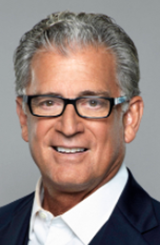
Armed Forces Merit Award 2021 finalists revealed

Fort Worth, Texas — Five finalists have been named for the 2021 Armed Forces Merit Award presented by the Football Writers Association of America (FWAA) – defensive lineman and Marine veteran Damian Jackson of University of Nebraska, Navy veteran and coach Robert Green, Troy chancellor and Marine Dr. Jack Hawkins, Jr., Battlefields to Ballfields founder Mike Pereira, and Nevada coach and Army veteran Jordan Simmons.

Jackson advanced to the final round of voting in 2019 for the award while the others are all first-time finalists.

The announcement of the 2021 Armed Forces Merit Award recipient will be made via an 11 a.m. (CT) teleconference Thursday, Nov. 11 – Veteran’s Day – by Lockheed Martin Armed Forces Bowl Executive Director Brant Ringler and FWAA President Heather Dinich.

Created in June 2012, the award honors an individual and/or a group with a military background and/or involvement that has an impact within the realm of college football.

The Armed Forces Merit Awards selection committee is comprised of seven FWAA members and two representatives from the Lockheed Martin Armed Forces Bowl.  A total of 28 individuals and three programs were nominated for the 2021 award.

Past recipients of the Armed Forces Merit Award presented by the FWAA include Nate Boyer of the University of Texas (2012), Brandon McCoy of the University of North Texas (2013), Daniel Rodriguez from Clemson University (2014), Bret Robertson of Westminster College (Fulton, Mo., 2015), Steven Rhodes from Middle Tennessee State University (2016), Dr. Chris Howard from Robert Morris University (2018), Army West Point assistant coach Mike Viti (2019) and Collin O’Donnell of Bluefield College of Virginia.

Boyer (long snapper), McCoy (defensive lineman), Rodriquez (wide receiver), Robertson (defensive back) and O’Donnell (defensive lineman) served in the Army before playing collegiate football.  Rhodes, a Marine, played four seasons at Middle Tennessee and participated in the 2013 Lockheed Martin Armed Forces Bowl with the Blue Raiders.  Viti (fullback) played at Army West Point prior to his military service.

A 1991 graduate of the United States Air Force Academy, Dr. Howard was a Rhodes Scholar and recipient of the 1990 Campbell Trophy, the highest academic award in the nation presented to a senior college football player.  A member of the College Football Playoff Selection Committee (2017-19), Dr. Howard was inducted into the CoSIDA Academic All-America Hall of Fame and a recipient of the NCAA Silver Anniversary Award, which recognizes distinguished individuals on the 25th anniversary of the conclusion of their collegiate athletic careers.

Kansas State and its football team were honored in November 2017 as the sixth recipient of the Armed Forces Merit Award for the university’s partnership with the United States Army that created a bond between the school’s athletic department and the Iron Rangers at Fort Riley.

Contacts – Tim Simmons, AFMA Coordinator at 720/244-6580 or bfishinc@aol.com, Steve Richardson, FWAA at 214/870-6516 or tiger@fwaa.com

ESPN Events, a division of ESPN, owns and operates a portfolio of 34 collegiate sporting events nationwide. The roster includes five early-season college football games, 17 college bowl games, 11 college basketball events and a college softball event, which accounts for approximately 400 hours of live programming, reaches nearly 64 million viewers and attracts over 800,000 attendees each year. With satellite offices in more than 10 markets across the country, ESPN Events builds relationships with conferences, schools and local communities, as well as providing unique experiences for teams and fans.  For more information, visit the official website, Facebook, Twitter or YouTube pages.

The Football Writers Association of America (FWAA, http://www.sportswriters.net) Founded in 1941, the FWAA consists of journalists, broadcasters, publicists, photographers and key executives in all areas of college football. The FWAA works to govern media access and gameday operations while presenting awards and honors, including an annual All-America team.

Robert B. Green

Robert B. Green is in his ninth season at the Naval Academy and his seventh as a coach on the field.  He is also in his second year as the Director of Racial Equality for the Navy football program.  Green spent his first two years as the Director of Player Development assisting Coach Ken Niumatalolo and the officer representatives with professional development and molding of Navy football players to assume future positions of leadership in the Navy and Marine Corps.  A 1998 Navy graduate where he was a three-year starter as a defensive back, Green was commissioned as a Second Lieutenant in the U. S. Marine Corps in May 1998.  Green retired from military service in the summer of 2017.  As a Marine, the former Lieutenant Colonel’s personal decorations include Navy and Marine Corps Achievement Medal (2nd award), Navy and Marine Corps Commendation Medal (2nd award), Meritorious Service Medal (2nd Award), Defense Meritorious Service Medal, and Legion of Merit.

Dr. Jack Hawkins Jr.

Dr. Jack Hawkins, Jr., a member of the College Football Playoffs’ Board of Managers as a representing for the Sun Belt Conference, has been the Chancellor of Troy University since September 1, 1989.  After completing his bachelor’s degree in 1967 from the University of Montevallo, Hawkins served in the U.S. Marine Corps and served as a platoon leader during the Vietnam War.  For his combat duty, he received the Bronze Star, the Purple Heart and a citation from the Korean Marine Corps.  Dr. Hawkins was an assistant dean at UAB and president of the Alabama Institute for Deaf and Blind.  Dr. Hawkins is the longest serving CEO of a public university in the nation. In 30-plus years at the school, Dr. Hawkins has orchestrated the change of Troy’s name, a move to Division 1-A and help oversee the investment of $400 million in new and modernized facilities.  During Dr. Hawkins’ tenure, Troy University has been recognized as a leading institution for members of the military and veterans by U.S. News and World Report, GI Jobs, Military Times Edge, Advanced Military Education, and more.

Damian Jackson

Damian Jackson has played in every game this season at the University of Nebraska as a backup outside linebacker.  Nominated for the Armed Forces Merit Award for the past three seasons, Jackson was a finalist in 2019.  He has made the Big 10 All-Academic team that last three seasons.  Joining the football team in 2017 as a walk-on, Jackson was placed on scholarship for the 2020 season and has now played in the last 13 games for the Cornhuskers.  Jackson served as a member of the Navy SEALs for four years after graduating from Shadow Ridge High School in Las Vegas, Nev., in 2010.  He was not a member of the football team in high school but did participate in baseball and soccer.  A child, youth and family studies major, Jackson is on pace to graduate in December of 2021. He has volunteered his time with the Nebraska Football Road Race, a Day of Service and local hospital visits.  Jackson was the featured individual in a University of Nebraska video leading a crowd of people down a street, carrying a U.S. flag. Jackson eventually stops in front of an Army veteran, a sheriff, a firefighter, and a paramedic. Jackson takes off his helmet, which has a U.S. flag on it, and salutes the veteran, who salutes him in return.

Mike Pereira

Mike Pereira is the chairman of Battlefields to Ballfields (B2B), a foundation that he founded to “give veterans the resources and opportunity to be sports officials.”  With a board of directors comprised of people experienced in business, military service, and officiating, Founded in 2017, B2B provides scholarships to veterans to give them an opportunity to get integrated back into their community through officiating.  Endorsed by the National Association of Sports Officials, the B2B has provided more than 400 scholarships for men and women coming out of military service in 47 of the 50 states.  Nate Boyer, the first recipient of the Armed Forces Merit Award, is on the B2B board.  Pereira officiated football for 25 years before entering the NFL where he ran the officiating program for 12 years before becoming a rules analyst for Fox Sports NFL and college football telecasts.

Jordan Simmons

Jordon Simmons is in his fifth season as the strength and conditioning coach at the University of Nevada as he brought a strong military and football background to the Wolf Pack.  In 2020, he was named by Jay Norvell as assistant head coach.  A native of Redondo Beach, Calif., Simmons came to the Wolf Pack from North Carolina, where he opened a kickboxing gym after a year with the United States 3rd Group Special Forces in Fort Bragg, N.C.  In his time with the Special Forces, Simmons worked with wounded warriors and executed team training for groups readying for deployment.  One of Norvell’s few original staffers at Nevada, Simmons’ father (Jerry) spent 23 years in the NFL as the head strength and conditioning coach for the Patriots, Browns, Ravens and Panthers.

Dave Matter named FWAA Beat Writer of the Year

Veteran Mizzou scribe is 11th recipient of the award

DALLAS — Dave Matter of the St. Louis Post-Dispatch has been named the FWAA Steve Ellis Beat Writer of the Year for his coverage of the University of Missouri football team during a pandemic-ravaged 2020-21.

The FWAA has named a Beat Writer of the Year since the 2011 season in honor of Steve Ellis, long-time Tallahassee Democrat writer who passed away in 2009. Democrat sports editor Jim Henry once wrote of Ellis: “Nobody covered Florida State athletics with the passion and ferocity that Ellis did for 30 years.”

Dave Matter

“As our industry evolves, I take more pride in being a newspaper beat writer in 2021 than ever before,” said Matter, who has covered the Missouri football beat for more than two decades. “To be recognized for that work is deeply appreciated, especially by my peers in the FWAA.

“Writers make our way with words, but I’ve struggled to find the best ones to describe how incredibly touched and honored I am to win this award,” Matter added. “Just to be mentioned with the past winners — some I know well and some only by their work and reputation — is the honor of a lifetime.”

Previous winners of the FWAA’s Beat Writer Award: Doug Lesmerises of the Cleveland Plain Dealer (2011), Mark Blaudschun of the Boston Globe and Steve Wieberg of USA Today (2012), Jon Wilner of the San Jose Mercury News (2013), Tim May of the Columbus Dispatch (2014), Chris Dufresne of the Los Angeles Times (2015), Jason Kersey of The Oklahoman (2016), Mike Griffith of SEC Country (2017), Dennis Dodd of CBSSports.com and Chris Vannini of The Athletic (2018), Brett McMurphy of Stadium Network (2019) and Ross Dellenger of Sports Illustrated (2020).

Matter has lived the Missouri beat — now on his fourth football coach (Larry Smith, Gary Pinkel, Barry Odom and the current head football coach Eliah Drinkwitz) — since the late 1990s when he still was a student at Missouri. He was a staple at the Columbia Daily Tribune until 2013 when he went to work for the St. Louis Post-Dispatch, his current employer.

“Before he became such a fixture around Mizzou athletics that the Antlers (Missouri student group) started chanting his name at basketball games, Dave Matter made a name for himself by willing to stand in the sun longer than anyone else,” said Joe Walljasper, former Columbia Daily Tribune Sports Editor. “He watched every minute of every broiling preseason football practice, interviewed everyone who would speak to him, and then wrote long blog posts — thousands and thousands of words — that put the whole sweaty mess into context.

“I would prefer not to know how much unpaid overtime he worked, but he built a strong reader following and earned the respect of the people he covered,” Walljasper added. “Through the years, he’s developed sources, honed his writing style and accumulated the institutional knowledge that turns a good reporter into a great reporter. But he never lost the willingness to put in the work.”

Matter has won writing awards in the FWAA Best Writing Contest and others: Associated Press Sports Editors Top Ten twice and National Sports Media Association three times. He has had three books published, including “The 100-Yard Journey: A Life in Coaching and Battling for the Win” (Triumph Books), co-authored with former Missouri coach Gary Pinkel, whom he covered from 2001 to 2015.

He is a 2000s jack-of-all trades beat writer. In addition to writing game stories, features, analysis pieces, columns, blogs, he hosts weekly on-line chats, a podcast, a weekly TV show covering University of Missouri Athletics available statewide via cable and on-line.

To top that off, Matter is an adjunct instructor at the MU School of Journalism. He teaches an introduction to writing course, “instructing first-year undergraduates how to compose news stories and press releases in multiple formats and media, including print, online, TV/radio and podcasts.”

“He is relentless as a journalist, selfless as a teammate and totally on top of what is going on at Mizzou,” St. Louis Post-Dispatch columnist BenFrederickson said. “Yes, sometimes even more so than the folks who work there. I’ve learned so much from watching Dave work, and his strengths truly set him apart when the pandemic’s challenge arrived. During a time when Zoom ruled and creativity suffered, Dave didn’t settle. He blazed his own path, rewarding his readers with quality coverage. He can hit you in the feels with a feature, teach you something about the sport in an analysis piece, and break big news. All in one day.”

Frederickson added that Matter had been instrumental in reviving the St. Louis Post-Dispatch’s campus correspondent’s job, which “gives Mizzou students an opportunity to get valuable experience covering the Tigers while still in school. He (Matter) is an advocate for the next generation while providing a great example to follow every day.”

Matter summed up the FWAA award this way: “This award isn’t possible without the editors who have turned me loose on the Mizzou beat over the last two decades: Roger Hensley and Cameron Hollway at the Post-Dispatch and from the Columbia Tribune, Joe Walljasper and the late Kent Heitholt, who gave me my first paying job in journalism and someone we’ve dearly missed since we lost him 20 years ago this fall. I proudly dedicate this award to his memory.”

Founded in 1941, the Football Writers Association of America consists of journalists, broadcasters, publicists, photographers and key executives in all areas of college football. The FWAA works to govern media access and gameday operations while presenting awards and honors, including an annual All-America team. For more information about the FWAA and its programs and initiatives, contact Executive Director Steve Richardson at 214-870-6516 or tiger@fwaa.com.

Outland Trophy history: Offensive tackle Alex Leatherwood, Alabama, 2020 recipient

This is the 15th and last in a series on Outland Trophy winners from 2006 to 2020. From 1946 to 2005, Outland Trophy winners were profiled in a book by Gene Duffey, Sixty Years of the Outland Trophy. We have now caught up with the last 15 winners.

(Leatherwood was selected 17th overall in the 2021 NFL Draft by the Las Vegas Raiders. He is playing his rookie season in the NFL this fall.)     

By Gene Duffey, Author

In the 2009 movie, The Blind Side, based on Mississippi left tackle Michael Oher, his position is featured, praised and even glorified, as long as you don’t have to play it. It’s the left tackle who must protect the blind side of a right-handed quarterback in the pocket.

Logically, Alabama’s Alex Leatherwood, who helped the Crimson Tide win the 2020 national championship, played left tackle and won the 75th Outland Trophy.

Coaches knew the importance of the position long before fans did. The movie opened with a replay of Washington Redskins quarterback Joe Theismann being crushed from behind by a blitzing linebacker — from The Blind Side.

You better have a good left tackle if you want your quarterback to be able to walk by the fourth quarter.   

Every offensive line needs an anchor, and that anchor is usually the left tackle,” Alabama’s offensive line coach Kyle Flood (at the time) told the audience at Omaha’s Outland Trophy dinner in a video.

“That guy is the security blanket for the offensive line coach, and the entire offensive line. What you don’t see about (Leatherwood) is his consistent preparation, all the reps he takes in practice and the great example he sets for all the young guys on the team.”

Leatherwood offered a simple explanation for his work ethic in practice. “I was trying to be the best player I can be,” he said.

Flood ran the offensive line at Alabama during Leatherwood’s junior and senior seasons, then followed Steve Sarkisian to Texas in January 2021 to become offensive coordinator for the Longhorns.

Alabama’s offense did more than score points. The Tide steamrolled their opponents in 2020. They averaged 48.5 points a game, second best in the country.  

More…

Outland Trophy history: Offensive tackle Penei Sewell, Oregon, 2019 recipient

This is the 14th in a series on Outland Trophy winners from 2006 to 2020. From 1946 to 2005, Outland Trophy winners were profiled in a book by Gene Duffey, Sixty Years of the Outland Trophy. We are catching up with the last 15 winners.

(Offensive tackle Penei Sewell was the first Outland Trophy winner from Oregon and also the initial recipient from American Samoa, a U.S. Territory. He was selected seventh overall by the Detroit Lions in the 2021 NFL Draft and is playing his first year of professional football this fall.)  

By Gene Duffey, Author

American Samoa is a small group of islands in the South Pacific,

4,800 miles southwest of Los Angeles. The population is 55,000, scattered around 75 square miles.

It’s also the birthplace of Penei Sewell, the steamroller offensive tackle who won the Outland Trophy at Oregon in 2019.

There are more links with American Samoa and American college football than you would think.

Jack Thompson, an excellent quarterback at Washington State in the 1970s was nicknamed the “Throwin’ Samoan.” Thompson, also born in American Samoa, set the NCAA record for career passing yards in 1978 before college football turned into a pass-first, run-last game.

Two of Sewell’s uncles played in the NFL. Richard Brown, a linebacker at San Diego State, spent 10 years in the NFL with the Rams, Chargers, Browns and Vikings. Isaac Sopoaga, a defensive tackle at Hawaii, lasted 12 years in the NFL, mostly with the 49ers.

Penei’s father, Gabe, was an assistant high school coach in American Samoa. 

Between Sewell’s size and lineage, he was destined to become a football player — a really good football player.

When Penei was about 5, he remembers former USC safety Troy Polamalu and several of his Pittsburgh Steeler teammates coming to American Samoa to put on a summer camp. A typical kid, Penei, too young to participate, spent most of the time running around, watching the older kids go through the drills at the camp. He became hooked on football.

 “I think that left a lasting impression on Penei and all my sons,” Gabe Sewell told the Salt Lake City Deseret News years later.

Gabriel, the oldest of Gabe’s four sons, walked on at Nevada and played defensive back and linebacker. His senior year, in 2019, he finished fourth on the team in tackles.

Nephi, the second son, played defensive back at Utah. He appeared in three games as a freshman in 2019. Noah, two years younger than Penei, followed him to Oregon and played linebacker.

More…

Nominations sought for 2021 Armed Forces Merit Award

Fort Worth, Texas — Nominations are now being accepted for the 2021 Armed Forces Merit Award presented by the Football Writers Association of America.

Coordinated by the staff at the Lockheed Martin Armed Forces Bowl, the Armed Forces Merit Award presented by the FWAA was created in June 2012 “to honor an individual and/or a group with a military background and/or involvement that have an impact within the realm of college football.”

Nominations for the 2021 Armed Forces Merit Award will be accepted through October 1, when a selection committee of seven FWAA members and two representatives from the Lockheed Martin Armed Forces Bowl will review the list of candidates for the 10th annual presentation.

“We are pleased to join with the Football Writers Association of America to honor an individual with a military background or group that works with our armed services that has an impact within college football,” said Brant Ringler, the executive director of the Lockheed Martin Armed Forces Bowl.

FWAA executive director Steve Richardson echoed Ringler’s sentiments along with adding that “we have an outstanding list of candidates each year and it is difficult to honor only one recipient when there are several individuals and programs that are very deserving of the honor.”

With 41 nominations (38 individuals and three programs) considered for the 2020 award, Bluefield College defensive lineman Collin O’Donnell was selected as the ninth recipient of the Armed Forces Merit Award. Serving in the U.S Army from 2013-2016, O’Donnell compiled 68 total tackles in his three seasons at Bluefield with four sacks and 10 tackles for losses.

During his military service, O’Donnell was injured in Afghanistan, After two years at Walter Reed National Military Medical Hospital and seven operations to save his foot, he fully rehabilitated and went back home to Buffalo, N.Y., where he began training with the sole intention of playing college football.

After arriving at Bluefield College in the summer of 2018, O’Donnell demonstrated leadership in the Ram football program and performed service to the community. He received numerous awards, highlighted by winning a small business grant that allowed him to open his Coffee and Bake shop called “The Grind” in May 2020.

Nate Boyer of the University of Texas was the initial recipient in 2012. Other recipients were Brandon McCoy of the University of North Texas in 2013, Daniel Rodriguez from Clemson University in 2014, Bret Robertson of Westminster College (Fulton, Mo.) in 2015, Steven Rhodes from Middle Tennessee State University in 2016, Dr. Chris Howard from Robert Morris University in 2018 and Army West Point coach and military service veteran Mike Viti in 2019.

Kansas State and its football team were honored in November 2017 as the sixth recipient of the Armed Forces Merit Award for the university’s partnership with the United States Army that created a bond between the school’s athletic department and the Iron Rangers at Fort Riley.

2021 nominations for the 2021 Armed Forces Merit Award presented by the FWAA should be submitted to Tim Simmons (bfishinc@aol.com, 303/678-8484), the award’s coordinator, by October 1. The nomination link can be found at https://www.armedforcesbowl.com/armed-forces#meritaward-section.

Armed Forces Merit Award presented by the FWAA – 2021 Nominations

Programs

  • Athletes Of Valor, Alex Stone, Founder & CEO, Athletes of Valor (U. S. Marines)
  • Battlefields To Ballfields, Mike Pereira, CEO/President/Director
  • National Association of College Directors of Athletics, Wounded Warrior Project

Active Players

  • Cornelius Andrews, Union College, WR, 5-7, 148, Jun., Stockbridge, Ga.
  • Rashaud Freeman, Webber International, LB, 6-0, 225, Jun, Jacksonville, Fla. (U. S. Army)
  • Kyran Griffin-Isom, Troy University, WR, 6-3, 172, Soph., New Orleans, La. (U. S. Marines)
  • Rasheed Holloway, Union College, WR, 6-0, 198, Jun., Fort Lauderdale, Fla.
  • Damian Jackson, Nebraska, DL, 6-2, 275, Jun. Las Vegas, Nev. (U. S. Navy)
  • Kenwon Mack, Union College, CB, 5-9, 165, Soph., Detroit, Mich.

Football Coaching Staff

  • Troy Calhoun, Head Coach, United States Air Force Academy (U. S. Air Force)
  • Jake Campbell, Assistant Backfield, United States Air Force Academy (U. S. Air Force)
  • Robert Green, Defense Assistant & Director of Racial Equality, United States Naval Academy (U. S. Marine Corps)
  • Brian Knorr, Inside Linebackers, U. S. Air Force Academy (U. S. Air Force)
  • Steed Lobotzke, Offensive Line, United States Air Force Academy (U. S. Air Force)
  • Alex Means, Outside Linebackers, United States Air Force Academy (U. S. Air Force)
  • Ben Miller, Running Backs/Special Teams Coordinator, United States Air Force Academy (U. S. Air Force)
  • Andre Morris, Spurs, United States Air Force Academy (U. S. Air Force)
  • John Rudzinski, Defensive Coordinator, United States Air Force Academy (U. S. Air Force)
  • Brett Skene, Offensive Assistant, United States Air Force Academy (U. S. Air Force)
  • Trent Steelman, Quarterbacks, Eastern Kentucky University (U. S. Army)
  • Mike Thiessen, Offensive Coordinator/Quarterbacks, United States Air Force Academy (U. S. Air Force)
  • Charlton Warren, Defensive Backs, Georgia (U. S. Air Force)
  • Mick Yokitis, Wide Receivers, United States Naval Academy (U. S. Navy)

Football Support Staff

  • CPT Donald Bowers, Director of Player Development, United States Naval Academy (U. S. Marines)
  • Clayton Kendrick-Holmes, Chief of Staff/Football Operations, United States Military Academy (U. S. Navy)
  • LTC John Nawoichyk, Assistant AD/Military Operations, United States Military Academy (U. S. Army)
  • Omar Nelson, Director of Player Development, United States Naval Academy (U. S. Navy)
  • CPT Blake Powers, Admission Support, United States Military Academy (U. S. Army)
  • Steve Senn, Director of Recruiting, United States Air Force Academy (U. S. Air Force)
  • Jordan Simmons, Director of Football Strength & Conditioning/Assistant Head Football Coach, Nevada (U. S. Army)
  • Rusty Whitt, Football Strength & Conditioning Coach, Troy University (U. S. Army)

University Leadership

  • Dr. Jack Hawkins, Jr., Chancellor of Troy University (U. S. Marine Corps)
  • Jim Knowlton, Director of Athletics, University of California (U. S. Army)

Outland Trophy history: Defensive tackle Quinnen Williams, Alabama, 2018 recipient

This is the 13th in a series of stories on Outland Trophy winners from 2006 to 2020.  From 1946 to 2005, the first 60 Outland Trophy winners were profiled in the book 60 Years of the Outland Trophy by Gene Duffey. In celebration of the Outland Trophy’s 75th Anniversary we are catching up with the last 15 recipients.

(Alabama defensive lineman Quinnen Williams was selected No. 3 overall by the New York Jets in the 2019 NFL Draft. He played 13 games as a rookie, making 28 tackles, registering 2.5 sacks and collecting a sack. Last season with the Jets, Williams made 55 total tackles (32 unassisted). He had 7.5 sacks and two forced fumbles.)   

By Gene Duffey, Author

It is a short hop down Interstate 59 from Birmingham to Tuscaloosa, Alabama–just 57 miles southwest to the exit at McFarland Boulevard. Although almost neighbors, that distance meant worlds apart to a young Quinnen Williams.

The promising defensive lineman from Birmingham’s Wenonah High School took official visits to Auburn and Mississippi. He committed to Auburn.

Then, Alabama’s Nick Saban called with a scholarship. The King of college football was offering the keys to the castle. Talk about an offer too good to refuse.

Williams, who would go on to claim the Outland Trophy at Alabama in 2018, was a quiet kid, unusual for a position where ferocity is considered a key ingredient.

 “He was in the shell a little bit (when he arrived), but he was a good football player,” said Karl Dunbar, Alabama’s defensive line coach at the time.

Quinnen wasn’t shy by nature. There was a reason for that shell. His mother, Marquischa, a first-grade teacher, died of breast cancer Aug. 10, 2010 when he was only 12. She was just 37.

Losing a mother at any age is difficult. When one is 12, it makes it even tougher.

Marquischa Williams was an Auburn fan. Quinnen’s older brother, Quincy, played linebacker at FCS Murray State and was drafted by the Jacksonville Jaguars.

 “Quinnen took it the hardest,” Quincy told Ross Dellenger of Sports Illustrated about Marquishca’s passing. “He was a momma’s boy, the one with the big heart. The only person he talks to about it is me. When we do talk, I let him know every single time how proud she is looking down at us.”

More…

Members: Nominate your son or daughter for the Volney Meece Scholarship

The FWAA is now accepting applications for the 25th annual Volney Meece Scholarship.

For an application please email Dave Sittler at davesitt@aol.com.

Applications must be received by Dec. 15, 2021.

The scholarship is awarded annually by the FWAA and named for the late Volney Meece, who served 22 years as the FWAA’s Executive Director and was the organization’s President in 1971.

The $1,000 annual grant for four years is awarded to a deserving son or daughter of an FWAA member. High school seniors and current college students are eligible. Since the program started in 1997, the FWAA has distributed more than $90,000 in scholarship money to deserving children of FWAA members.

The winner will be announced in January.

Past winners of the Volney Meece Scholarship

1997 Brett Goering Topeka, Kan.
1998 Kelly Brooks Denver, Colo.
1999 James Butz Schaumberg, Ill.
2000 Sara Barnhart Atlanta, Ga.
2001 Patrick Davis Coventry, Conn.
2002 Jacqueline O’Toole Gaithersburg, Md.
2003 Garrett Holtz Denver, Colo.
2004 Katie Hersom Oklahoma City, Okla.
2005 Katie Wieberg Lawson, Mo.
2006 Kaylynn Monroe Winter Park, Fla.
2007 Nate Kerkhoff Overland Park, Kan.
2008 Jack Caywood Lawrence, Kan.
2009 Haley Dodd Overland Park, Kan.
2010 Donald Hunt Philadelphia, Pa.
2011 Alaina Martens Papillion, Neb.
2012 Emily Alford Tupelo, Miss.
2013 Sarah Helsley Edmond, Okla.
2014Robert AbramsonPalos Verde, Calif.
2015Danielle HooverTulsa, Okla.
2016Dolen HelwagenPataskala, Ohio
2017Elizabeth SchroederNorman, Okla.
2018Mallory RosettaBaton Rouge, La.
2019Alexandra HaleyHamilton, N.J.
2020Sarah ShatelOmaha, Neb.

Outland Trophy history: Ed Oliver, defensive tackle, Houston, 2017 recipient

This is the 12th in a series on Outland Trophy winners from 2006 to 2020. From 1946 to 2005, Outland Trophy winners were profiled in a book by Gene Duffey, Sixty Years of the Outland Trophy. We are catching up with the last 15 winners.

(Defensive tackle Ed Oliver was selected in the first round of the 2019 NFL Draft, ninth overall by the Buffalo Bills. He begins his third season with the Bills this fall. In his first two seasons Oliver has played in 32 games and started 23 of those. He has 76 total tackles in his first two seasons, 29 of those assisted and eight sacks. Oliver has forced two fumbles and deflected five passes.)   

 By Gene Duffey, Author

The University of Houston’s Ed Oliver grew up wanting to be first. So far, so good. He wasn’t the first born in his family, having to settle for being the third of four boys, but he couldn’t help that.

He wanted to be the first one remembered among the string of outstanding defensive linemen to come out of Westfield High School in Houston. Check. He wanted to be the first five-star recruit to play at the University of Houston. Check. He wanted to become the first sophomore to win the Outland Trophy. Check.

“I was the first to do a lot of things,” he said. “I was the first recruit this high to come to Houston. I take pride in being the first sophomore to win the Outland. That’s an amazing accomplishment. I could have done it as a freshman. See, I’m kind of hard on myself.”

Ed Oliver’s value system is different from most. Good is never good enough. The best can still be better.

“I do things differently,” he said. “I have a different mindset. Sometimes I get down on myself. I just want to work out and get better. The more people tell me I’m good, the more I come down on myself. Nobody could be harder on myself than me.

“Even though I might sugar coat it in front of people, it’s always in the back of my head what I did wrong. I could have done better on this play. When I watch film, I (look for) what I could have done better, not how good I am.”

Oliver began receiving extra attention from opposing offensive lines when he started on the varsity as a sophomore in high school. Double teams became a way of life.

He continued to prove himself worthy of the extra attention right away as a freshman in college. Oliver started the opening game of the 2016 season against No. 3 Oklahoma, made seven tackles, including two sacks, and helped the Cougars pull off a 33-23 upset of the Sooners.

More…

Outland Trophy history: Offensive tackle Cam Robinson, Alabama, 2016 recipient

This is the 11th in a series on Outland Trophy winners from 2006 to2020. From 1946 to 2005, Outland Trophy winners were profiled in a book by Gene Duffey, Sixty Years of the Outland Trophy. We are catching up with the last 15 winners.

(Offensive tackle Cam Robinson was selected in the second round of the 2017 NFL Draft, 34th overall by the Jacksonville Jaguars. The fourth of six Alabama linemen (all since 1999) to win the Outland Trophy, Robinson has started and played in 47 games for the Jaguars since 2017.)  

By Gene Duffey, Author

Pencil spotlight in on the football player. No, not Deshaun Watson, the star of Clemson’s 35-31 victory over Alabama to win the national championship in January 2017. Check out the other player nearby, the hulking guy in white, wearing No. 74.

ESPN’s Tom Rinaldi is interviewing Watson, the Tigers quarterback and star of the evening, who won the game with a touchdown pass to Hunter Renfrow with just two seconds to play.

Suddenly, from off camera, a huge Alabama player appears. Look at the guy. It’s Cam Robinson, the Crimson Tide’s oversized left tackle. Robinson shakes hands with Watson and whispers in his ear.

“I know him fairly well,” Robinson says the next day. “We were in the same recruiting class. I just wanted to congratulate him.”

It was a class move in a tough moment for Robinson. His Alabama team had just lost a chance to win back-to-back national championships by the narrowest of margins. The pain of the defeat will stay with Robinson.

“I have a hard time getting over the losses,” he says. “I think it’s going to linger for a while.”

Robinson didn’t lose very often in his three years at Alabama. He started all 44 games of his college career and lost only four times, twice to Mississippi and twice in the national playoffs. In addition to the Clemson defeat, the other occurred to eventual champion Ohio State in the semifinals as a true freshman.

He followed a long and winding road from West Monroe, Louisiana to claiming the 2016 Outland Trophy.

His first experience with organized football began in a YMCA league at age 7. Next, he moved on to touch football and eventually tackle.

Robinson started out on the defensive side of the ball, playing linebacker and defensive end. “It was fun,” he said.

Alabama’s Cam Robinson, winner of the 2016 Outland Trophy, addresses the audience at the Outland Trophy Presentation Banquet on Jan. 11, 2017, in Omaha. Photo by C41 Photography.

He didn’t switch to offense until his freshman year at Ouachita High School in Monroe, Louisiana where he began as a left tackle. “The offensive line coach and head coach asked me to move (to offense),” said Robinson. “It was something I was willing to do.”

Robinson began high school at Ouachita, where he played for two years. He transferred to West Monroe High School for his junior year. “I always wanted to go to West Monroe,” he said.

His older sister, Charity, played basketball at Ouachita and their mother, Priscilla, did not want her children to attend different high schools. When Charity went off to McNeese State, Cam transferred to West Monroe.

Cam played a little basketball himself in high school. He played his freshman year at Ouachita and his junior year at West Monroe before giving up the sport. “I wanted to be freer to focus on what I wanted to do,” said Robinson. Translation: Concentrate on football.

Robinson was a familiar name to the coaches at West Monroe before he arrived.

“We knew him since he was a little kid,” said Jerry Arledge, an assistant coach at West Monroe during Robinson’s time there and later the head coach. “His uncles went to school here and his grandparents live about two blocks from our stadium.”

Some people were upset at the school that Robinson left behind. “There were ill feelings from the Ouachita people,” said Arledge, adding that he heard charges of tampering. That means high school football is a very big deal in the area.

Robinson already weighed 325 pounds when he arrived at West Monroe. “He was the biggest kid I’ve ever seen,” said Arledge. “The thing so impressive about Cam is he’s got the greatest feet of any big kid I’ve seen.”

Arledge had inherited some football talent from his father, Steve Foley, who played at Northeast Louisiana. Foley went on to play linebacker for seven seasons in the NFL, five with the Cincinnati Bengals and one each with the Houston Texans and San Diego Chargers.

Cam’s junior year West Monroe reached the state semifinals. The Rebels built a 48-20 lead, then lost 49-48. “I didn’t play defense (in that game),” said Robinson. But the loss still hurt.

West Monroe went 9-3 Robinson’s senior season, losing 14-0 in the second round of the state playoffs to Central High School, near Baton Rouge.

Robinson did play some defensive end in high school when he “was needed.”

In his senior year the website 24/7 Sports rated Robinson the No. 2 prospect in Louisiana behind running back Leonard Fournette, who went on to LSU and became the No. 4 pick by Jacksonville in the 2017 NFL draft.

“You had to fire him up very little,” Arledge of Robinson. “No doubt in our mind (he would be this good). When you’re that size, you’re going to be the No. 1 pick in America.”

Michigan, Auburn and Arkansas joined the hunt for the big guy.  Robinson finally narrowed his college choices to Alabama, LSU and Texas. “When I was young I was a huge LSU fan, even in high school,” he said. “When the recruiting process started it’s a different aspect.”

The winning tradition in Tuscaloosa sold him on the Crimson Tide. Alabama won the national championship in 2012, beating Notre Dame for the title, and won its first 11 games in 2013 before losing to Auburn on the infamous missed field goal return. Oklahoma then beat Alabama in the Sugar Bowl.

Robinson committed to Alabama just before the start of his senior year at West Monroe. Naturally, there was some resentment when he announced he would be leaving the state for Alabama, instead of enrolling at LSU.

“The Tigers don’t miss many (in Louisiana),” said Arledge. “(Robinson signing with Alabama) was one of the things that got the LSU offensive line coach fired.”

 Robinson was able to graduate from high school in December and enrolled at Alabama for the spring semester.

“It was tough physically and mentally,” Robinson said of his early transition to college football. But he was glad he made the move to college one semester ahead of schedule, benefiting tremendously from spring practice.

“It helped me a lot,” he said. “I got a good grip on the playbook. Football wise, the talent level was much different.”

The left tackle position had been left open when Cyrus Kouandjio, the starter in 2013, left for the NFL. The Buffalo Bills drafted him in the second round in 2014, No. 44 overall.

Robinson handled the new challenge well enough to earn the starting left tackle spot in the spring as a true freshman.

“I was not surprised,” he said. “It was one of my goals. I came in and worked extremely hard.”

Alabama opened the 2014 season, with Robinson in the starting lineup, against West Virginia in the Georgia Dome in front of over 70,000.

“It was completely different from high school,” he said. “I think I played pretty well. I don’t think I gave up any sacks.”

Neither did Alabama. The Tide attack rolled to 538 yards of total offense and beat West Virginia, 33-23.

The Tide went 11-1 that season, losing only to Mississippi by six points in Oxford, then beat Missouri in the SEC Championship Game back in Atlanta. Ohio State stopped the Tide express in the national semifinals en route to the national championship.

Robinson and Alabama reached the summit in college football in 2015, winning the national championship with a pulsating 45-40 win over Clemson in the title game at Glendale, Arizona. “It’s the highest achievement,” said Robinson. “It was an exciting moment, overwhelming really.”

Robinson hit a bump in the road the following May. He was back home on a break before summer school started. He and Hootie Jones, a reserve safety and special teams player at Alabama who was also from Monroe, were arrested late at night in a local park for illegal possession of stolen firearms and possession of a controlled substance in Ouachita Parish.

Police officers smelled marijuana when they approached Robinson’s car. Robinson was seated in the driver’s seat.

Police spotted a handgun on Jones’ lap, who was sitting in the passenger seat. A bag of marijuana was found on the floor. A stolen handgun was also located under Robinson’s seat.

Jones and Robinson were released early the next morning on bonds. 

Prosecutors decided not to pursue the case a month later for lack of evidence.

“I used it as a learning experience,” said Robinson.

After initially suspending both players indefinitely, Alabama coach Nick Saban allowed both back on the field for the start of the season. They both completed community service.

Louisiana district attorney Jerry D. Jones expressed sympathy for the Alabama athletes. “I want to emphasize once again that the main reason I’m doing this is that I refuse to ruin the lives of two young men who have spent their adolescence and teenage years, working and sweating, while we were all in the air conditioning,” Jones told Ben Kercheval of CBS Sports.

In addition to his early success in games, Robinson continued to improve on the practice field. Attempting to block Jonathan Allen, the nation’s premier defensive tackle in 2016, made him better.

“Going against guys of that caliber has to help you,” said Robinson.

He identified the defensive ends who gave him the most trouble as Missouri’s Shane Ray, who went on to play linebacker for the Denver Broncos,  and Mississippi State’s Preston Smith, who played linebacker for  the Washington Football Team and now Green Bay.

When Ed Orgeron replaced Les Miles at coach at LSU in late September 2016, he was asked about the Tigers’ offensive line. “The one that’s the left tackle at Alabama should be here,” Orgeron said, remembering  Robinson’s roots. “So, we need to get better.”

In his three years at Tuscaloosa, Robinson gained an appreciation for Saban.

“I don’t think he’s as bad as people think he is,” said Robinson. “He’s more laid back than people think.”

Robinson suffered a sprained knee one Saturday in practice his sophomore year and injured a shoulder in the fourth quarter of a win over Chattanooga in November of his junior year. But he never missed a start.

Robinson said he never thought about winning the Outland Trophy, even though he had helped the Tide average over 40 points and 477 yards of total offense per game in 2016, his junior year. Alabama’s offensive line gave up barely one sack a game.

Near the end of November Robinson was named a finalist, along with two other offensive linemen, Ohio State center Pat Elflein and Washington State guard Cody O’Connell.

In December 2016, the announcement was made at the College Football Hall of Fame in Atlanta when Robinson became the Crimson Tide’s fourth Outland Trophy recipient. After the 2020 season, Alabama has six Outland Trophy winners, five of them offensive linemen — all since 1999.

“It was an exciting moment, overwhelming really,”‘ Robinson said. “I got up and gave my little talk. I wasn’t nervous.”

Applause, applause


More…

Outland Trophy history: Offensive guard Joshua Garnett, Stanford, 2015 recipient

This is the 10th in a series of stories on Outland Trophy winners from 2006 to 2020.  From 1946 to 2005, the first 60 Outland Trophy winners were profiled in the book 60 Years of the Outland Trophy by Gene Duffey. In celebration of the Outland Trophy’s 75th Anniversary we are catching up with the last 15 recipients.

(Guard Joshua Garnett was selected 28th overall in the 2016 NFL Draft by the San Francisco 49ers. Garnett played in 15 games and started 11 as a rookie for the 49ers. A series of injuries starting in 2017 would basically curtail his stay with the 49ers, and he was released before the start of the 2019 regular season. Garnett retired in October 2020.)   

By Gene Duffey, Author

Some people think of Stanford, known for its fine academics and lineage of great quarterbacks, as the high and mighty of college football. But its linemen have proved they can get down and dirty when need be.

The Stanford offensive linemen nicknamed themselves the “Tunnel Union Workers” around 2008. The idea came from offensive tackle Chris Marinelli of Braintree, Massachusetts. Marinelli’s father worked construction on the Big Dig in Boston, a huge project that rerouted Interstate 93 under the city and connected Logan Airport to downtown. It took 15 years to complete and cost $14.6 billion.

“A lot of people didn’t understand it,” guard Joshua Garnett said of the nickname. “You have to bring your hardhat and earn your stripes. We took a lot of pride in that.”

“It’s a cool tradition,” added left tackle Kyle Murphy, who played next to Garnett.

Their names may not be as well-known as former Stanford quarterbacks Frankie Albert, John Brodie, Heisman Trophy winner Jim Plunkett, someone named John Elway and Andrew Luck. But Stanford’s  offensive linemen in the last decade or so have included several All-Americans … enter Chase Beeler in 2010, tackle Jonathan Martin in 2011, guard David DeCastro in 2011, guard-tackle David Yankey in 2013 and tackle Andrus Peat in 2014.

DeCastro was an Outland finalist in 2011, and Yankey was a semifinalist in 2013.

Garnett fit right in. He became Stanford’s first Outland Trophy winner in 2015. The senior from Puyallup, Wash. helped Stanford to a 12-2 record, including a Rose Bowl rout of Iowa.

Garnett’s father, Scott, played nose guard at Washington in the early 1980s.

More…